
Can I Take an Electric Vehicle on a Ferry? A Guide for EV Drivers on Hibernia Line
So you’ve discovered that it’s easy to travel with your vehicle between Cork and Boulogne, and the sky is the limit for your future adventures! If you have an electric vehicle, you might be wondering whether you can take it on a ferry and whether this will make your plans more complicated.
The good news is that there’s no need to worry. Electric vehicles are welcome on board the Hibernia Line, and you can make the most of the convenient timetable to plan your holiday. Whether you’re travelling to France so that you can explore mainland Europe with ease or going to Ireland to discover the ancient treasures along the Wild Atlantic Way, taking your EV on the ferry will be a great way to start.
Let’s take a look at travelling with your electric vehicle and find out how ferry travel with an EV really works, and we’ll share our top tips for your trip!
Taking an Electric Vehicle on a Ferry
Travelling by ferry is convenient and straightforward, and it’s an easy way to travel compared with flying. Not only can you enjoy luxurious accommodation and facilities on board to get yourself in the holiday mood, but you can also take your dog or cat and your own vehicle with you to set yourself up for a successful and relaxing break.
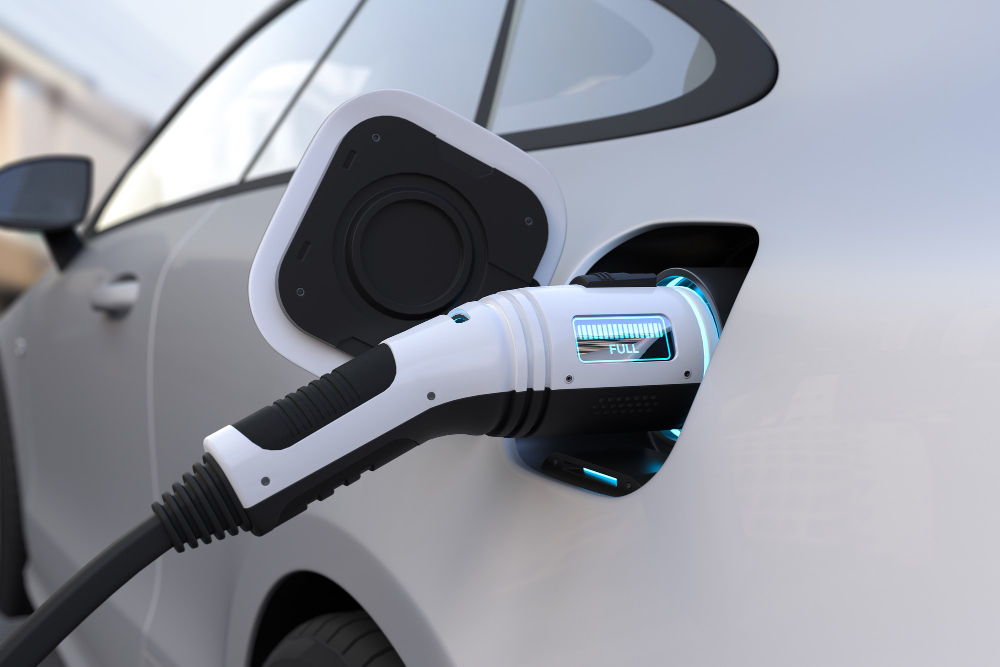
When you bring your electric vehicle on board a Hibernia ferry, you’ll find it an easy process to drive on and park your car as directed by the members of staff on the vehicle deck. There is no distinction made between electric vehicles and conventional fuel vehicles on board, and we do not currently have charging facilities for use during the crossing. You will find EV chargers located close to the ferry port both at Ringaskiddy, Cork and Boulogne-sur-Mer, so you can plan to charge your vehicle before or after your ferry crossing to make the most of your driving time.
We recommend arriving early at the ferry port so that you can check in calmly, whether you are driving an electric vehicle or not. It is important to know how far your charge will allow you to drive, as you will not be able to charge on board the ferry and you may find that you need to allow extra time to queue for charging at the ferry port.
Most ferry operators can accommodate electric vehicles, but some may have additional rules to accommodate them. At Hibernia Line, we know that many people like to travel with their electric vehicle, and this is a very convenient way to take a road trip with multiple destinations. When you book your trip, you may be required to specify if you will be bringing an electric vehicle, and you may need to supply information about your car at this time.
Travel with your Electric Vehicle
Travelling around France and other countries in mainland Europe is easy, and you’ll find plenty of charging points so that you can plan a route that will work for you and your travelling companions. If you are travelling to Ireland with your EV, you’ll find the same convenient infrastructure, with plenty of places to charge your vehicle as you explore. You’ll find it helpful to have a map or app that highlights public EV charging points for you, so you can ensure you can always top up your battery when you need it.
Don’t forget to pack your EV charging cable, as this may be required at public chargers, and an adapter in case public charging points use a different type of socket than your charger. The standard EV charging cable across Europe has a Type 2 vehicle-side connector, and most Direct Current chargers or rapid chargers include tethered cables that use a CCS connector.
There are more than half a million public chargers across mainland Europe, and this number is increasing all the time. In the Netherlands and Germany, particularly, you’ll find EV chargers to be plentiful and well located. In some places, you may need to use a prepaid card or other system to make charging easier, and you can find out about this ahead of time to make your journey stress-free.
There have been some concerns around the safety of electric cars since their introduction, including the increased risk of fire. However, in recent years, electric vehicles have been seen to be safe, perhaps even safer than non-electric vehicles, and there is no increased risk of fire. Of course, if you are aware that your electric vehicle has any issues, particularly with the battery, you should ensure that these are addressed before you travel.
Travelling in Europe with your Electric Vehicle
If you’ve chosen an electric car, you’ll be minimising your carbon footprint as you explore mainland Europe. When you arrive in Boulogne, you’ll have easy access to France, Germany, Belgium, the Netherlands and even Scandinavia, and the EV charging network offers ample charging points throughout Europe. This makes it a pleasure to plan your holiday or road trip, and booking your ferry crossing is the first step.
Travelling with your EV is the greenest way to discover a new destination, and with plenty of flexible charging points, you can get off the beaten path and create a route that takes you through rural areas or allows you to explore some extraordinary towns and cities across several countries if you wish to. You can set your EV map to find public chargers in the countries you are travelling in, and you can find out in advance whether you will need a fob or key card to access these or whether you are required to register online. Doing this ahead of time will help you to plan your trip and save you the stress of accidentally running out of charge while you are away!
Driving in Europe: Your Essentials
When you’re driving in Europe in your electric vehicle, you’ll need to ensure you have the correct documentation in case you are asked to produce it at any time. This includes:
- Your driving licence. You will need a valid driving licence or international driving permit to drive abroad. Check the regulations in the country or countries you are travelling to and ensure that you meet the requirements there.
- Your passport. You should carry your passport with you at all times in case you are required to produce it. If you are travelling from Ireland, a valid national identity card may be used instead in most situations. All passengers in your vehicle must have a valid passport or identity card, including children, and you will need to check the expiry date for each passport, as some destinations require a certain number of months before expiry in order to enter the country.
- Your vehicle insurance. You should check your car insurance cover carefully to ensure that you are covered while you are driving abroad. Some policies have limitations on the length of cover in other countries, so it is very important to confirm this. You should also ensure that all drivers are covered if you wish to share the driving, as sometimes permission to drive in another country applies only to the main driver on the insurance policy.
- Your vehicle logbook. You should carry your vehicle logbook with you in case you are asked to produce it at any time. Depending on the regulations in the country you are travelling from, and where your vehicle is registered, you will have a logbook that includes your registration number and vehicle identification number (VIN), as well as the make, model, colour and engine size of your car and the type of fuel it uses. This will include your details as the registered owner, and you will need it if you are stopped while driving or if you are involved in an incident while you are abroad.
- Your travel insurance. Your travel insurance policy should cover the entire period you are away from home, and you may need to specify the countries you are travelling through or stopping in. You should ensure that all travellers are covered on your policy, and that any specific activities you are doing are included in your policy. Some sports, including skiing, require a particular policy or extension, so it’s vital to ensure that you are covered for everything you wish to do on your trip.
- Your breakdown cover information. Breakdown cover is a good idea if you are travelling long distances, as the cost of vehicle recovery can be much higher than you might think. If you do not have roadside assistance in the EU included in your policy, you may be able to extend your policy or purchase EU breakdown cover to give you the peace of mind you need. Ensure that you will be able to access the services you need in an emergency and take a hard copy of the details with you so that you can find them easily if you need to.
- Safety equipment. When you are travelling in Europe, you may find that there are different requirements for the equipment you carry in your car. In France, for instance, it is mandatory to carry a red warning triangle and to have a reflective/high-visibility vest for every person travelling in your vehicle. You should check the rules for the countries you are travelling to and ensure that you have the required equipment with you to avoid hefty fines. You may also need to adjust your headlamps or use headlamp beam deflectors.
- First aid kit. You should carry a first aid kit with you at all times, and ensure that this is well stocked and that all supplies are in date. Your first aid kit should contain a good selection of plasters and bandages in several sizes, as well as burn gel, a silver foil blanket and any pain-relieving medication you might need. You can buy a pre-packed first aid kit or create your own. A supply of water in your car is a good idea, especially if you are travelling in hot weather, and this can be lifesaving in an emergency situation or if you are stuck with a broken-down vehicle for many hours.
When you are travelling in an electric vehicle, you should be able to switch between kilometres and metres to suit the country you are travelling through, and this can help to simplify your drive and make it easier to monitor your speeds while you are driving on unfamiliar roads.
The Hibernia Line: Car Ferry from Boulogne to Cork
The Hibernia Line offers flexible ferry routes between France and Ireland for foot passengers, personal vehicles and cargo vehicles, and we welcome electric vehicles on board. We believe that anything we can do to benefit the environment is great news for everyone, and we will be happy to help you wherever we can. We have a range of comfortable, well-appointed cabins with en-suite bathrooms to ensure that everyone is happy on board, and this includes accessible cabins and pet-friendly cabins.
We have worked hard to create a welcoming, relaxing environment, and we have a selection of bars and restaurants on board that give you plenty of delicious options for everyone. We offer six convenient overnight crossings, and we can help you with all of the details so that you can relax and enjoy your trip.
Book your ferry crossing online today!